New Directions in Manual Therapy
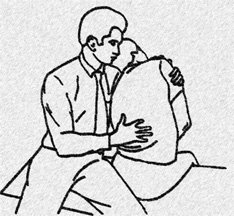
Muscle Energy Technique (MET)
The Muscle Energy Technique was developed by Fred Mitchell, Sr., D.O., in the 1950’s as an osteopathic alternative to high velocity manipulation. It is basically a neuromuscular mobilization system for all motion segments of the body. That is, it engages and regulates the sensorimotor impulses and any musculature that moves a particular body joint. We had the good fortune to learn this technique from Dr. Ed Stiles, D.O., who was part of the first small group of osteopaths that Dr. Mitchell later instructed in his approach.
MET uses precise, three-dimensional positioning of joints, followed by specific isometric muscle contractions of a patient against the manual resistance of a therapist. By employing the principles of Post-Isometric Relaxation and Reciprocal Inhibition on the relevant hypertonic musculature, dysfunctional joint mechanics and their associated mechanoreceptor hyperactivity can be normalized.
Immediate results include:
- return to healthy ROM,
- spontaneous strengthening of inhibited muscles,
- lessening of localized irritation and associated micro-edema,
- decreased sympathetic overload and
- increase of structural and functional integrity along the movement chain.
The MET Advantage
The Muscle Energy Technique is a mobilization tool with many facets. It is simultaneously a neuromuscular method, geared toward resetting muscle spindle activity and resting length; muscular re-education, stimulating muscles intrinsic to a joint towards functional balance and fine-motor redevelopment; postural re-education, whereby these intrinsic fibers reclaim duties adopted by the longer extrinsic musculature; and a passive approach to mobilization of the various joint surfaces. And as MET was developed by an osteopath, it offers its greatest advantages when applied from a holistic, osteopathic perspective.
When the Muscle Energy Technique is ideally used to mobilize a primary dysfunction, what follows is not an isolated increase in ROM but rather a bodywide event. A chain reaction of interdependent restrictions, some symptomatic and some not, can spontaneously progress toward normalcy.
Of course, for the Muscle Energy Technique this assumes:
- 1) the correct palpatory evaluation of the body’s key dysfunction;
- 2) a precise localization of this structure, including all of its associated bony, capsular, neural, vascular and fascial elements;
- 3) the manual positioning in three-dimensional space of these elements at their dysfunctional barrier to normal motion; and
- 4) proper control of both a patient’s muscle contraction and a therapist’s direction of resistance, progressing the barrier step by step until full range of motion is re-established.
The alternating passive mobilization, active contraction mechanism of MET brings a distinct advantage over pure passive facet or joint glide or high-velocity manipulation. And self-mobilizing through exercise alone, whether strengthening routines aimed at “weak” musculature or stretching programs for shortened tissues, tends to leap over the very structures most in need of mobilization; the body is very adept at protecting its primary dysfunctions, which once established, dictate compensatory routes to movement.
Since MET combines both passive and active mobilization cycles, and focuses precisely at these primary restrictions, it offers an efficiency and synergy difficult to achieve by other individual methods.
- MET is very effective for the mobilization of joints, correction of postural and movement asymmetries, stretching of muscles and reduction of pain.
These courses include three distinct aspects:
- Overview over the basic concepts and principles of Osteopathic Manual Therapy;
- Evaluation and Treatment with MET;
- an Evaluation Protocol, very efficient and applicable to all forms of manual therapy.
Learning Objectives :
The participants of this course will learn:
WHAT to treat:
- Learn the general principles of Osteopathic manual therapy and the place of MET within it.
- Understand the normal and dysfunctional joint mechanics of each segment in the upper body.
- Know the neurophysiological processes involved in dysfunction and MET treatment.
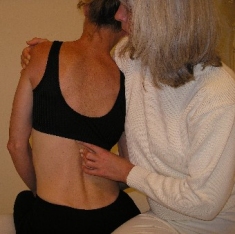
HOW to treat:
- Learn the necessary principles to apply MET successfully.
- Evaluate segmental joint dysfunction by active and passive motion tests.
- Develop the palpation and body mechanics to effectively target a restricted segment.
- Apply the neurophysical rules of the body to return dysfunction to function.
WHERE to treat:
- Learn a time-saving evaluation, usuable for all types of treatment.
- Identify with new palpatory skills both the area of greatest restriction in the body and the key segment within it (acc. to Dr. Ed Stiles, DO).
- Sequence the corrections so that the body can best accept and maintain them.